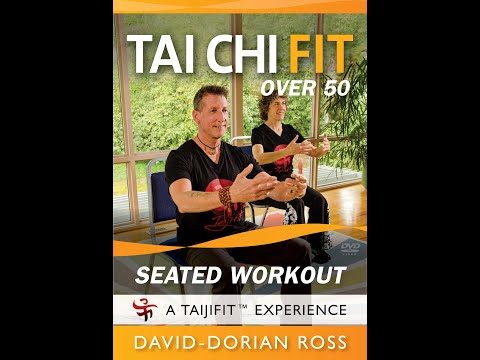
Tai Chi Fit OVER 50: SEATED WORKOUT (YMAA DVD series) David-Dorian Ross
Taught by YMAA Publication Center. Not hosted here — watch it on YouTube, or see everything this teacher contributed.
The facts
- Runtime
- 2 min (131 seconds)
- Posture
- Taught seated throughout
- Style
- Yang style — the most widely taught family, large slow circular movements and an upright frame
- Teaching
- The teacher moves with you, with minimal talking.
- Spoken cues
- English
- Verified
- Runtime verified against YouTube on 2026-08-02. The number above is what YouTube reports, not what the title claims — titles routinely round a fourteen-minute class down to “10 min”, and the session timer budgets against the real figure.
Where this fits in a session
Every Tai Chi session is the same arc, and each class is eligible only for the phases it can honestly fill. This one can take one slot:
- Form套路
- Continuous choreography. The cognitive and postural core of the practice.
The engine will reach for it when you have asked for gentle and moderate intensity — intensity in tai chi being stance height and single-leg time rather than speed — and it suits someone in their first weeks and someone with a few months behind them. Against the six things you can train for, it earns its place on leg and postural strength; attention, sequencing and memory. Choose one of those as your focus and this class becomes more likely to appear; choose something else and it will step aside for a class that serves it better. It will not appear twice in the same week if there is anything comparable to rotate to — keeping tomorrow from feeling like today is the selector's main job.
Is this safe for me?
This one is taught seated from beginning to end, so standing stability is not a requirement. Use a firm chair with no wheels and both feet flat on the floor.
The universal cautions apply here as they do everywhere: stop for sharp pain, chest pain, dizziness or breathlessness that does not settle; never force a knee past the toes; let the knee track over the foot. If you need to make a session easier, raise your stance before you shorten it. Tai Chi does not screen for contraindications and does not personalise around a diagnosis — the safety scope is written out in full, including what it refuses to do.
Classes the engine treats as neighbours
These fill the same slot for similar practitioners, which is exactly what the rotation draws on when it is avoiding a repeat.
- Wu-style Tai Chi The First Section of 108 Form — Shanye Tai Chi, 2 min
- SEATED TAICHI -SESSION 8 - 7 WEEK SEATED TAI CHI COURSE - REVIEW BEFORE CLOUD HANDS with Instruction — Traditional Li Branch Tai Chi, 2 min chair-friendly
- Seated Tai Chi for Arthritis: Lessons 1-5: Full Sequence — ProActive Therapy and Wellness, 2 min chair-friendly
- Chen Tai Chi 8 Form — Jamal Alek 陳德家, 2 min
- Dancing in the chair - Dr. Zibin Guo's Wheelchair Tai Chi Chuan — appliedtaiji, 2 min chair-friendly
- Chen Style Tai Chi Essential 18 Forms | Lesson 1 |Tai Chi Starting — Authentic China with Dawn, 2 min chair-friendly
You do not have to pick classes yourself. Open today's session and tell Tai Chi how steady you are, how long you have and what you are training for — it will place this class, or one of its neighbours, into a 2 min slot on a day when it fits, and it will not hand you the same thing tomorrow.